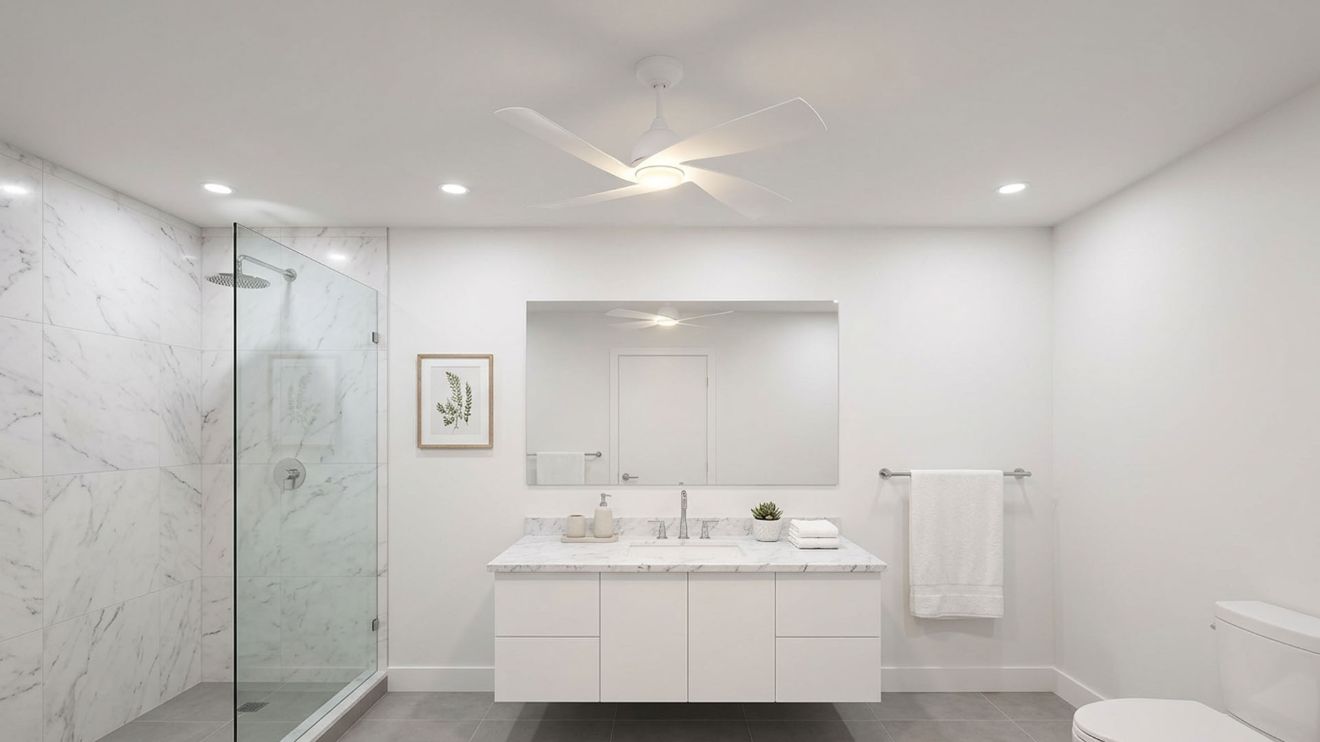
Steam from a hot shower, piles of damp towels, a dryer that never seems to stop running, all of this adds up to a lot of moisture in a small space. If you are relying only on an exhaust fan or a slightly open window, you are missing an easy way to move air and keep things more comfortable. The right bathroom ceiling fan or laundry room ceiling fan can help you feel cooler, protect finishes, and support better indoor humidity control when you choose it carefully.
At Dan’s Fan City, we help homeowners sort through ratings, finishes, and sizes every day. Below, we will walk through what works, what does not, and how to pick a fan that fits the way you actually use these rooms.
Why Moisture Control Matters in Bathrooms and Laundry Rooms
Bathrooms and laundry rooms are small, closed-off spaces where warm, moist air builds up fast. When humidity lingers, it can fog mirrors, swell doors and trim, and over time contribute to mildew or musty smells. Good air movement is one of the simplest tools for improving indoor air quality in these hard-working rooms.
A ceiling fan will not replace code-required ventilation, but it does help your exhaust fan do its job. By keeping air moving across damp surfaces, you make it harder for moisture to sit on walls, grout, and cabinetry. For many customers who ask how to reduce indoor humidity, our first tip is to pair a properly vented bath exhaust fan with a small, efficient ceiling fan running on a low speed after showers or laundry cycles.
Because these rooms are often under 75–100 square feet, a compact model is usually enough. Our guides to small ceiling fans for tight spaces show how a smaller fan can keep laundry rooms and bathrooms from feeling stuffy without overpowering the room.
Damp-Rated vs Wet-Rated: Getting the Rating Right
One of the biggest questions we hear is, “Do I really need a wet-rated fan in my bathroom?” In most cases, the answer is no. Here is the simple breakdown:
Damp-Rated Ceiling Fans
Designed for areas with high moisture and occasional condensation, but no direct water spray. Our guides on damp- and wet-rated fans explain why they are a great fit for covered outdoor spaces and also for humid indoor rooms like bathrooms and laundry rooms.
Wet-Rated Ceiling Fans
Built to handle direct contact with water. The motor housing, finishes, and blades are sealed so they can stand up to rain, hose spray, or constant exposure to the elements. These are the models you would mount where the fan can literally be rained on.
For a typical full bath or spa-style room, a damp-rated bathroom ceiling fan is usually the right call. It can live with steam and moisture from showers without needing the heavy-duty construction of an outdoor wet-rated fan. That lets you focus on style, size, and a quiet motor instead of overbuilding for conditions the fan will never see.
A wet-rated fan only becomes necessary indoors when the fan is mounted where it can be hit by direct water, such as above an open walk-in shower where spray can reach the blades, or in a partially open indoor–outdoor bath. In those rare cases, a wet-rated model with a sealed motor and stainless or specially coated hardware, like our Bombay series, makes sense.
Choosing the Best Bathroom Ceiling Fan: Size, Clearance, and Noise
Once you know you need a damp-rated model, the next step is sizing and placement. The best bathroom ceiling fan is one that fits the room and stays safely clear of walls, doors, and fixtures.
For most standard bathrooms:
Rooms up to about 75 square feet can use a fan with a blade span in the 26–36 inch range.
Slightly larger baths up to around 100 square feet often do well with 36–42 inch fans.
You can double-check the sizing for your bath in our Ceiling Fan Size Guide, which lists recommended blade spans for small rooms like bathrooms and laundry rooms.
When it comes to clearance, you want the blades roughly 7 to 9 feet above the floor and well away from the shower area. Your electrician and local building codes will guide the exact placement, but as a rule of thumb, avoid installing the fan directly over the tub or shower unless it is a wet-rated model and specifically allowed by your local code.
Noise is the other key detail. A quiet bathroom ceiling fan makes everyday routines more relaxing. Look for:
A quality motor designed for smooth, low-vibration operation
Multiple speed settings so you can run the fan gently for background air movement
Solid mounting hardware for minimal wobble
Many of the indoor and indoor/outdoor fans in our ceiling fan collection are engineered for quiet performance, which makes them a natural fit for bathrooms where you do not want the fan competing with your morning playlist.
Ceiling Fans for Laundry Rooms: Beating Heat and Humidity
Laundry rooms are humidity hot spots. Dryers throw off warm air, damp clothes sit in baskets, and many laundry rooms have no windows at all. A ceiling fan for laundry room use can help break up that heavy air so the space feels cooler and less sticky.
If you are picking a dedicated laundry room ceiling fan, start with the room size. Our size guide notes that many laundry rooms fall under 100 square feet, where a fan with a 26–42 inch span is ideal.
As with bathrooms, a damp-rated fan is typically the right choice here, especially if your washer and dryer sit close to the fan or if the room has no dedicated exhaust vent. A small, three- or four-blade model on a low or medium speed is usually all you need to keep the air moving and support indoor humidity control in the space.
Finishes, Materials, and Corrosion Resistance in Steamy Spaces
Steam and moisture can be tough on finishes over time, so what your fan is made of matters. Many damp- and wet-rated fans are built with:
Corrosion-resistant coatings on the motor housing to help prevent rust
Stainless steel hardware that holds up in humid environments
Specially treated blades, such as ABS or sealed wood, that resist warping and peeling
Our Raindance outdoor/indoor series, for example, uses a water-resistant housing, galvanized undercoat, and stainless hardware to stand up to moisture, salt, and everyday wear. While you may not need that level of protection in every bathroom, choosing a damp-rated fan with durable finishes means your white, black, or bronze fan looks good for years instead of dulling or spotting early.
If you are drawn to a particular finish because it matches your faucets or cabinets, check the product details to confirm whether the blades and motor are approved for damp locations. Some models, like our Dixie Belle line, are offered in versions designed specifically for damp-listed indoor/outdoor use, making them a smart match for steamy rooms.
Simple Moisture-Management Tips to Use With Your Fan
A well-chosen fan is only part of the moisture story. To really see a difference in comfort and indoor air quality, pair your fan with a few simple habits:
Run your fan after showers and laundry cycles. Let the fan continue on a low speed for 15–20 minutes after you are done to keep air moving across damp surfaces.
Use the bathroom exhaust fan together with the ceiling fan. The exhaust vent pulls moist air out, while the ceiling fan helps mix the air so moisture does not linger in corners.
Crack the door when possible. Even a small opening allows humid air to escape into larger, better-ventilated areas.
Keep vents, grilles, and fan blades clean. Dust buildup makes it harder for fans to move air effectively, which can work against your efforts at improving indoor air quality. Our outdoor fan care tips apply indoors too: a quick wipe-down goes a long way.
Small steps like these add up. If you are trying to figure out how to reduce indoor humidity without making big changes to your HVAC system, combining good habits with the right ceiling fan can make these small rooms feel fresher every day.
Ready to Upgrade Your Bathroom or Laundry Room Fan?
If you are rethinking your bathroom ceiling fan or planning a ceiling fan for laundry room use, we are here to help you sort through size, rating, and style. You can browse our full indoor ceiling fan collection online, including compact damp-rated models that fit tight spaces, then use our size and style guides to narrow down your options.
Prefer to talk it through? Visit your nearest Dan’s Fan City store or contact our team with your room dimensions and wish list. We will help you choose a quiet, efficient fan that looks great, keeps air moving, and fits the moisture conditions in your bathroom or laundry room just right.