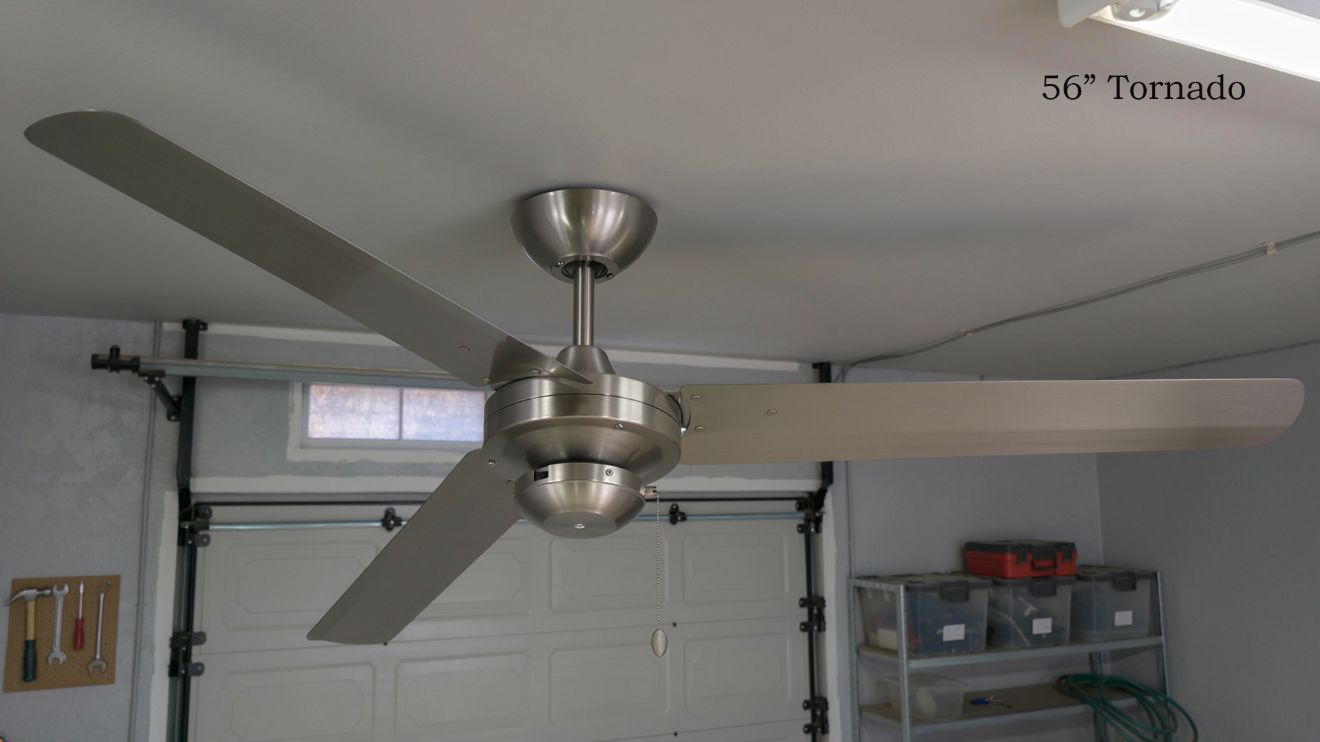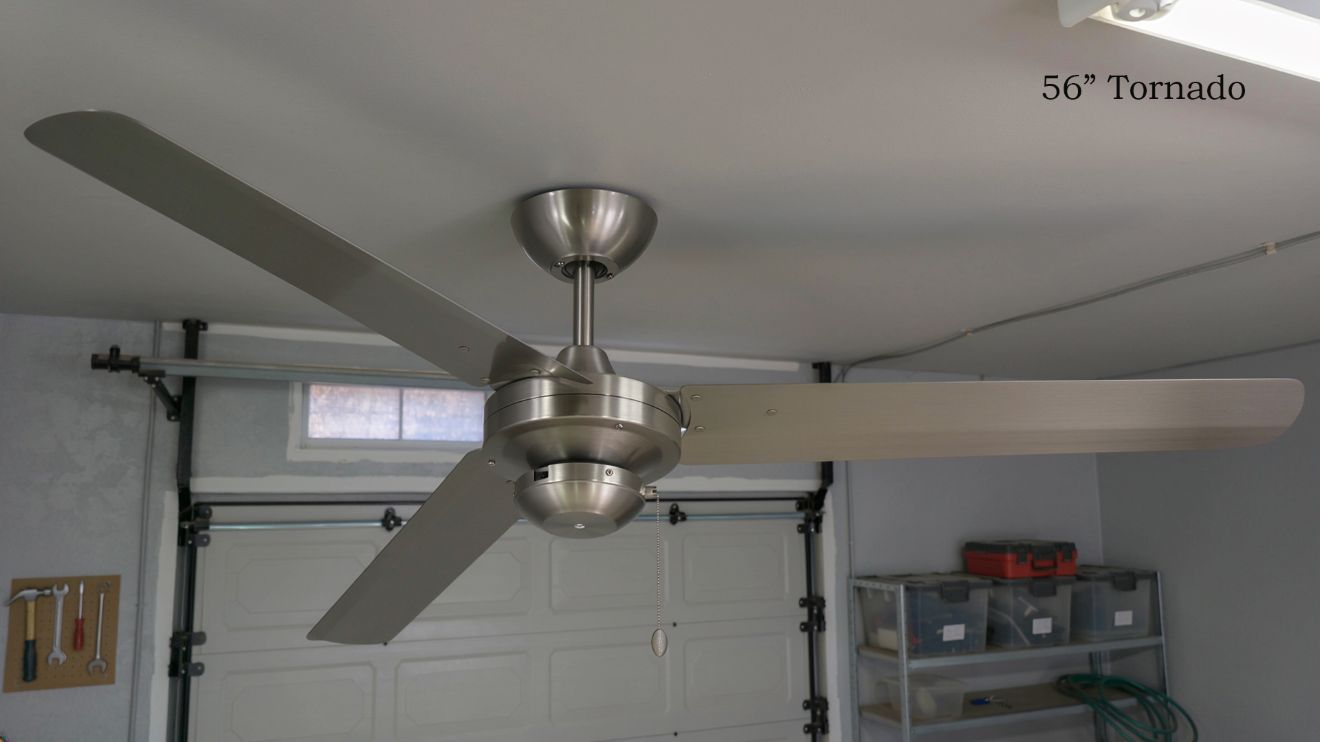
Garages and workshops are where a lot of real work happens. Power tools, parked vehicles, paint, yard equipment; all of them give off heat, fumes, and dust. Without the right airflow, those spaces get hot, stuffy, and uncomfortable fast.
That is where the right garage and workshop ceiling fans come in. In this guide, we will walk through what really matters for these rooms: CFM and airflow, durability in tougher conditions, and smart placement over workbenches and bays. We will also share a few practical garage ceiling fan ideas you can use right away.
Start With CFM: How Much Airflow Does Your Garage Need?
In a garage or shop, you are not just looking for a decorative fan. You want a high CFM ceiling fan that can actually move hot air away from work areas and help clear lingering fumes.
CFM, or cubic feet per minute, tells you how much air a fan moves at a given speed. Higher CFM means stronger airflow, which is why high airflow ceiling fans are a better match for bigger, open spaces like two- or three-car garages and deep workshops. Dan’s Fan City’s ceiling fan size guide explains how blade span and room size work together, and why larger spaces usually need fans with higher airflow ratings to stay comfortable.
A simple way to think about CFM in a garage or shop:
Measure the space: Length × width gives you square footage.
Look at ceiling height: Taller ceilings need more airflow to feel the same effect.
Aim higher than a bedroom fan: If a small bedroom can get by with moderate CFM, your garage probably needs a fan rated noticeably higher to handle heat from cars, tools, and appliances.
For very large or tall garages, an industrial ceiling fan is often the best fit. Our industrial ceiling fan collection is built for big areas like warehouses, workshops, and open-plan spaces where strong airflow is the priority.
Ceiling Fan Durability in Tougher Conditions: Motors, Housings, and Blades
Garages and shops are harder on fans than living rooms. Temperatures swing from hot to cold, dust collects on everything, and there is a good chance the fan will run for long stretches while you work. When comparing ceiling fans for shop or garage use, look closely at:
Motor Quality
Choose heavy-duty motors designed for continuous use and high speeds. Industrial and large-room fans are built with extra strength so they can run for hours without overheating.
Rugged Housings
Look for solid metal housings and high-quality finishes that can handle knocks, dust, and temperature changes. Our large ceiling fans lineup includes models built specifically to deliver strong airflow in bigger areas without sacrificing durability.
Blade Materials that Handle Swings in Temperature
In a non-conditioned garage, blades will see hot days and cool nights. Many of our industrial and outdoor-rated models use materials and finishes designed to resist warping, cracking, or peeling when the temperature shifts.
Easy-to-Clean Surfaces
Flat, sealed blades are faster to wipe down when sawdust or grinding dust settles on them. That makes it easier to keep your best shop fan working efficiently.
If you regularly use sanders, saws, or grinders, plan on a quick dust wipe as part of your shop clean-up routine. A clean fan can move more air with less noise and strain on the motor.
Damp-Rated Fans for Semi-Open Garages
Not every garage is fully enclosed. Some have open bays, roll-up doors that stay open for hours, or partial exposure to outdoor air. In those cases, moisture and humidity become part of the equation, and your fan choice should account for that.
You still may not need a fully wet-rated outdoor fan, but you should think about a damp-rated model. As we explain in our guide to damp- and wet-rated outdoor ceiling fans, damp-rated fans are built for covered spaces that see humidity and occasional moisture but not direct rain, making them a natural fit for patios, gazebos, and semi-open garages where you want extra protection without going full outdoor.
A damp-rated garage ceiling fan makes sense when your garage door stays open often and the space feels like an extension of the outdoors, when humid air or light wind-driven moisture can reach the fan, or when you want finishes and hardware that are more resistant to rust and corrosion. If your fan is fully protected from direct water, damp-rated is usually enough. If the fan could be hit by rain, spray from a pressure washer, or other direct water contact, that is when a true wet-rated outdoor model belongs on your shortlist.
Dust and Fumes: Airflow Strategy That Actually Helps
Good workshop ceiling fans do more than just make the room feel cooler. They also help you manage dust and fumes from projects and vehicles so the space is more comfortable to work in. The key is to think about how air moves through your garage instead of just turning the fan on high and hoping for the best. Pair your fan with real ventilation, like an open door, window, or vent fan, so the ceiling fan pushes warm, stale air toward the places where it can escape instead of just recirculating it.
When you are cutting, sanding, or grinding, try to keep the airflow moving across the room rather than blowing straight into a dust cloud. That way, particles move away from your breathing zone instead of right through it. Multiple speeds are also important. High speed is great for clearing the room after you finish a task, while lower speeds work well for long sessions when you want steady airflow without blowing papers, sawdust, or lightweight materials everywhere. Our article on industrial ceiling fans explains that these fans are designed to be the main cooling source in workspaces like garages and workshops, with stronger motors and higher airflow than typical residential fans. That is exactly what you want when you are trying to keep the air moving in a space filled with tools, vehicles, and storage.
Fan Placement: Over Benches, Bays, or Both?
Where you mount your fan changes how well it works. The best ceiling fans for garage and shop use are not just powerful; they are thoughtfully placed.
Think about your garage in zones:
Workbenches and tool walls: If you spend most of your time at a bench, consider installing a fan centered over that area. This gives you focused airflow where you stand, without necessarily blasting the entire garage at full speed.
Vehicle bays: For multi-car garages, placing a fan roughly between the bays or slightly forward toward the garage door can help move heat away from parked cars and keep air circulating when the door is open.
Open central placement: In a combined space where you swap between vehicles and bench work, a central fan with a larger blade span may be the best compromise. In some larger garages, it even makes sense to use two fans—one focused on the bench and one on the bays—to avoid dead spots.
Our local store teams often recommend large-diameter models when customers need serious airflow for garages and workshops, because they are built specifically to move air in big, open spaces with higher ceilings.
Fan Lighting, Controls, and Everyday Convenience
Power and durability are important, but features matter too. A lighted garage fan can replace or supplement existing fixtures so you are not working in your own shadow.
When you are comparing options, think about:
Integrated Lighting
Our lighted ceiling fan collection includes fans with built-in LED lights that brighten up workbenches and parking areas without the need for extra fixtures.
Control Type
Wall controls and remotes make it easy to adjust fan speed when your hands are full or dirty. For shops, wall-mounted switches are particularly handy near the door.
Noise level
Industrial fans are built to move a lot of air and can be a bit louder, which is usually fine in a workshop where tools are already noisy. If you want a quieter setup, look for high-performance residential models with strong motors and good CFM numbers.
Ready to Upgrade Your Garage or Shop Fan?
Whether you are starting from scratch or replacing an old unit, the best shop ceiling fan for your space will combine strong airflow, rugged construction, and smart placement. From compact damp-rated models for semi-open garages to full-size industrial options for wide workshops, Dan’s Fan City has fans built to handle real workspaces.
If you are ready to talk through sizes, ratings, and features, you can reach out directly through our Contact Us page and share your garage dimensions and how you use the space. If you would rather start by exploring options, our interactive Design Your Fan tool lets you build a custom fan by choosing your motor, blades, and light kit so you can dial in a garage or workshop fan that matches both your performance needs and your style.