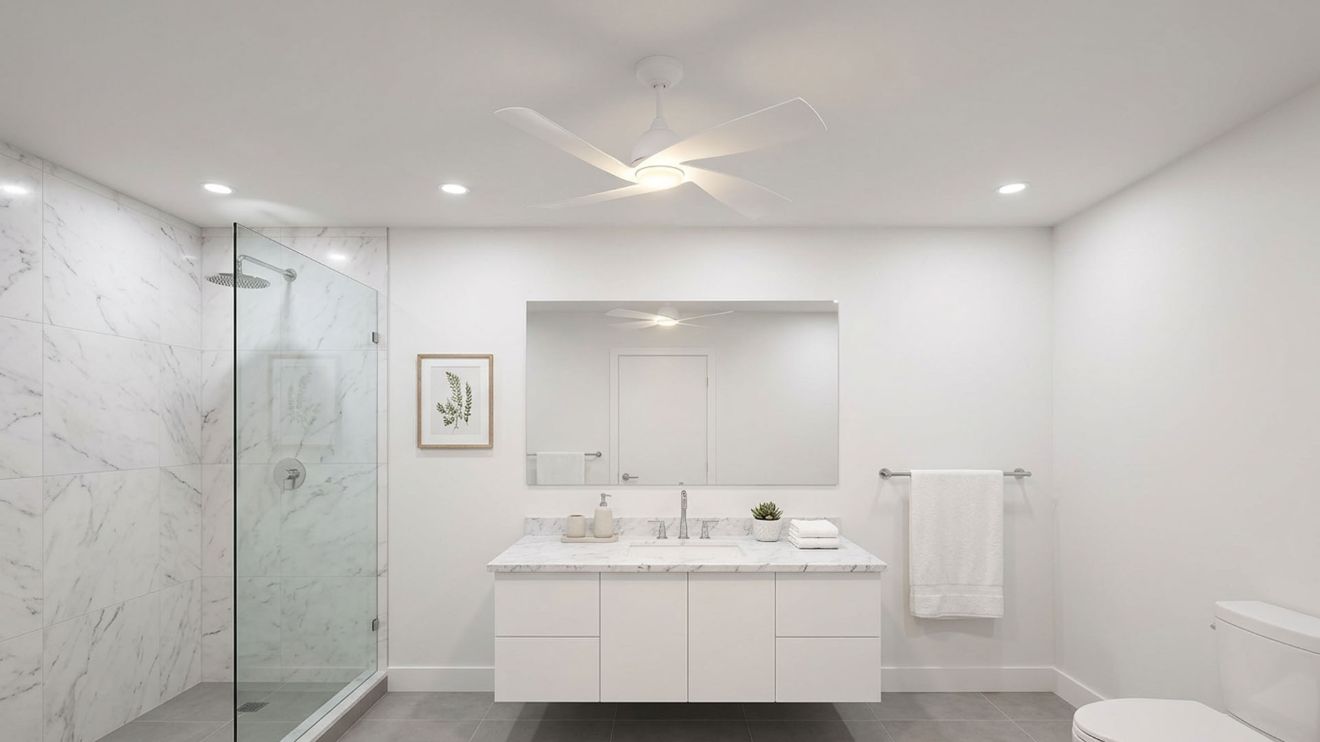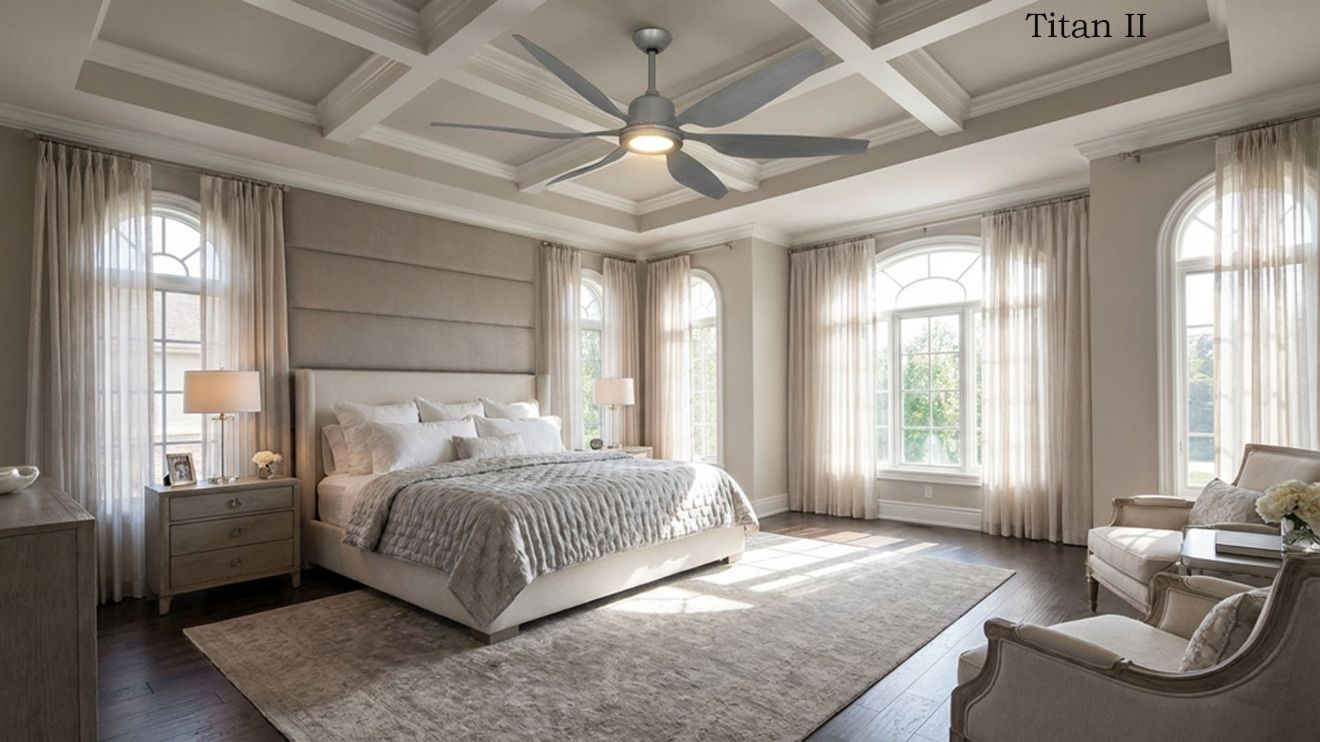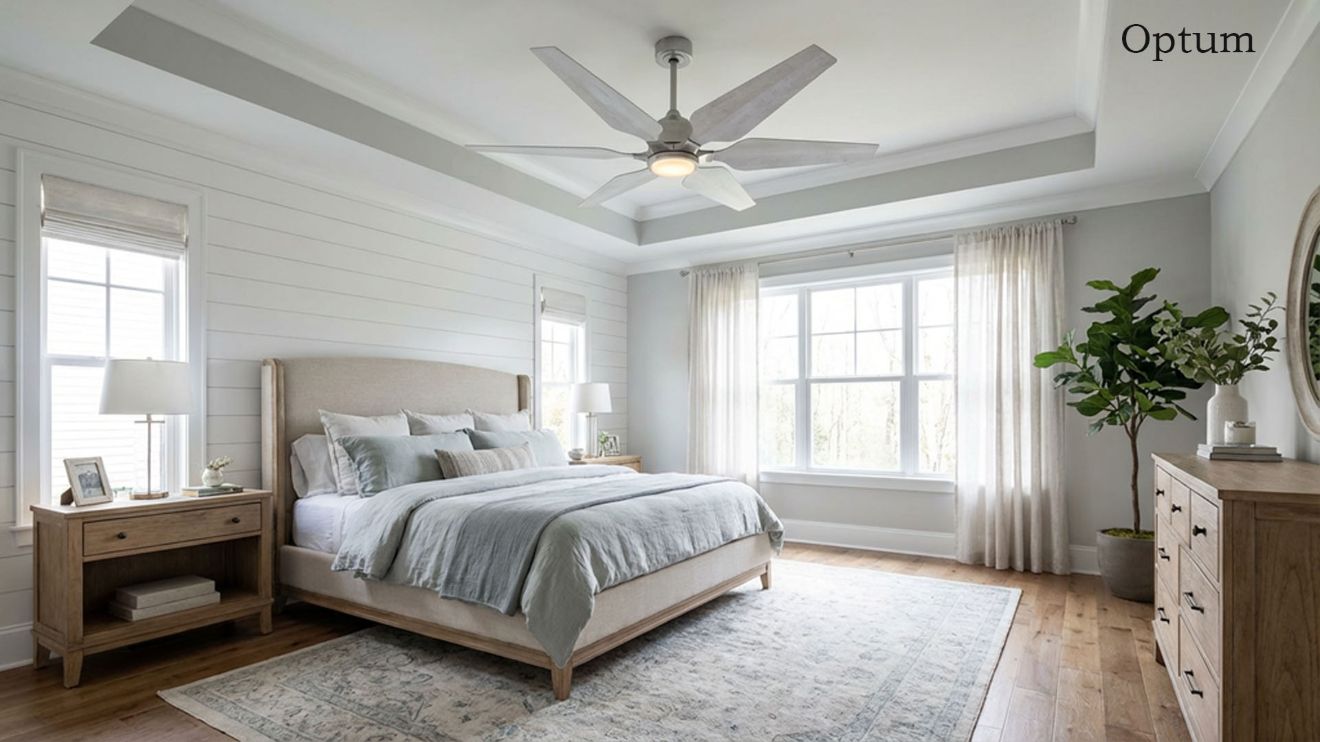
When you’re shopping for a new ceiling fan, one of the first questions you’ll run into is: how many blades should it have? Two, three, four, or even five? While the number of blades does influence style and performance, the real story is a little more nuanced. From airflow to noise levels to design preferences, the right choice depends on what matters most in your space.
Let’s break down what really matters when choosing the right fan for you.
Do More Blades Really Mean Less Noise?
If your ceiling fan is headed for a bedroom or quiet nook, noise matters. Historically, adding blades helped balance the fan and reduce ambient noise, which is why five-blade models remain popular in spaces where serenity is the goal. That said, modern motors and better engineering have changed the game, and some compact, small ceiling fans run whisper-quiet despite fewer blades.
If you’re comparing options and want a plain‑English refresher on jargon like CFM, AC vs. DC motors, and pitch, this quick ceiling fan terminology guide is handy. And to avoid common pitfalls (like prioritizing blade count over sizing), skim our blog on mistakes to avoid when choosing a ceiling fan.
Do Fewer Blades Mean Better Air Circulation?
A common misconception is that more blades always means more airflow. In reality, fewer blades can reduce drag and let the motor move air more efficiently, which is one reason industrial-sized ceiling fans often feature two or three blades. For homes, two‑ and three‑blade designs deliver strong airflow with a clean, modern look; four‑ and five‑blade fans typically trade a bit of intensity for a smoother, quieter feel.
Airflow and comfort depend heavily on matching ceiling fan blade size (span) to the room. If you’re optimizing a patio or pavilion, correct placement and height matter too—this primer on sizing and positioning fans for outdoor spaces shows how coverage and mounting height impact circulation just as much as blade count. For indoor rooms, our ceiling fan size guide explains how to measure and match span to square footage.
How Does Blade Pitch Affect Fan Performance?
Blade pitch, or the angle of the fan blades, plays a big role in how effectively a ceiling fan moves air. A higher pitch generally means the fan can push more air, but it also requires a stronger motor. Here are the key points to keep in mind:
-
Shallow pitch (less than 12 degrees): Moves air gently, but often doesn’t provide enough circulation in larger rooms.
-
Moderate pitch (12–15 degrees): The sweet spot for most residential ceiling fans, balancing airflow and energy efficiency.
-
Steep pitch (15–18 degrees or more): Delivers strong airflow, ideal for large spaces or high ceilings, but demands a high-quality motor.
-
Motor and adjustments: Pitch only pays off with the right motor. If you’re upgrading parts or making changes, we stock the fan parts and replacement blades you’ll need.
-
Maintenance matters: Dust and imbalance can reduce airflow efficiency. Here’s how to clean and maintain your ceiling fan so it keeps running smoothly.
-
Premium performance: For long-term reliability and airflow, many homeowners step up to premium ceiling fans that pair strong motors with optimized pitch.
FAQs About Ceiling Fan Blades
How many blades should a ceiling fan have?
There isn’t a single “best” number. Three blades often deliver punchy airflow in larger rooms; five blades tend to be smoother and quieter for bedrooms and living areas; two blades skew modern and can still move serious air with the right motor and pitch.
Does the number of blades on a ceiling fan matter for cooling?
It matters, but less than you’d think. Size, motor strength, and blade pitch typically outweigh blade count for perceived cooling.
How do you measure ceiling fan blades and blade size?
Measure from the tip of one blade to the motor center and double it to get the span. That span—paired with ceiling height—guides the right fan for your room.
What about “fan paddles,” angle, and pitch, do those terms mean the same thing?
“Fan paddles” refers to blades, while angle/pitch describes their tilt. Together with motor quality, these determine airflow and efficiency.
Your Perfect Fan is Waiting
Whether you love the sleek look of a three blade fan or the classic feel of a five blade ceiling fan, you don’t have to compromise on performance. Focus on the right combination of blade count, ceiling fan blade size, and pitch for your room—and you’ll feel the difference. If you want a quick refresher before you buy, the Ultimate Ceiling Fan Buyer’s Guide is a solid starting point.
You can also refresh an existing unit with new ceiling fan blades or adjust fan paddles and controls to fine-tune airflow. If you’re curious about smart controls or voice features, our guide to integrating fans with smart home systems explains how to add automation without overhauling your setup.
Ready to find your match? Browse our full ceiling fan selection or try the Custom Fan Builder to design every detail yourself.