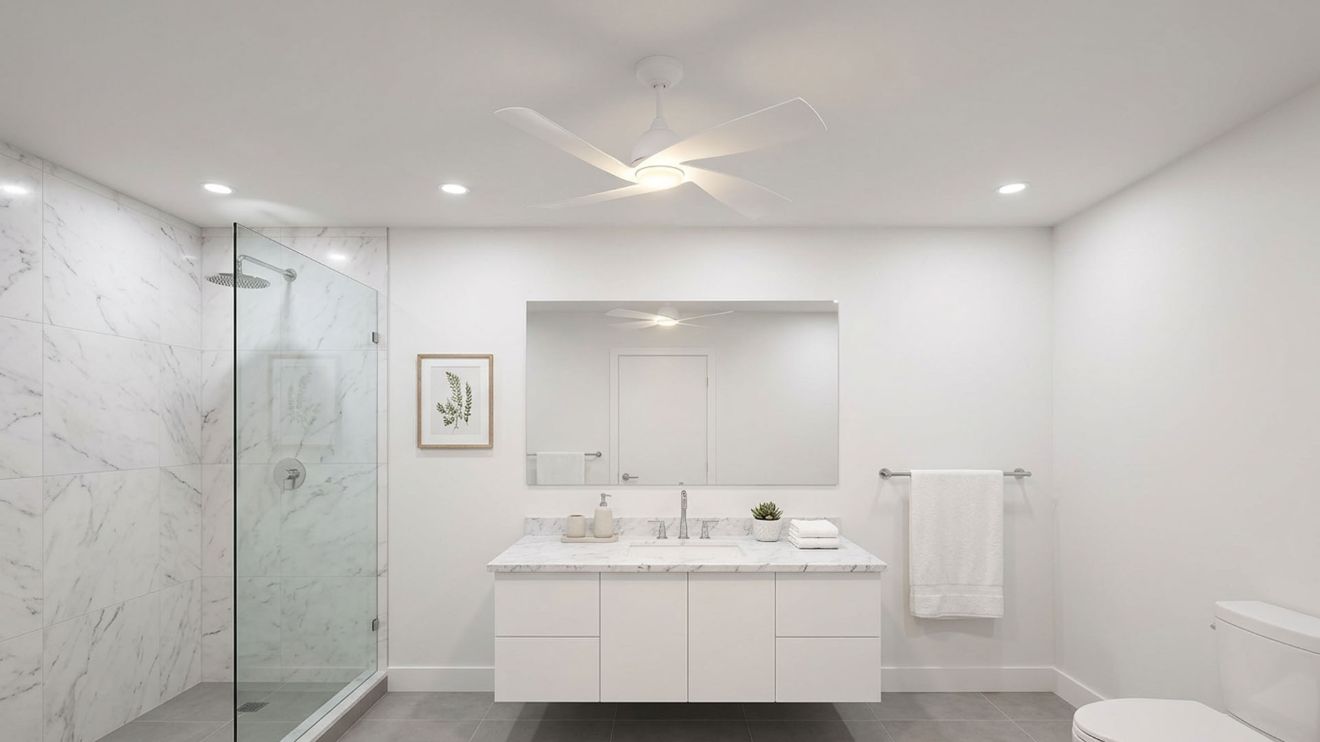

Choosing the right size ceiling fan isn’t just about aesthetics—it’s essential for comfort, airflow, and energy efficiency. A fan that’s too small won’t circulate air effectively, and one that’s too large can overpower a room. This ceiling fan size guide will help you match blade span to room size, ceiling height, and style preferences, so your fan works as good as it looks.
Quick Ceiling Fan Size Chart
Room Size |
Blade Span |
Ceiling Height Tip |
Best Use |
|
<75 sq ft |
26–36 inches |
Flush mount if <8 ft |
Hallways, laundry rooms |
|
76–144 sq ft |
36–42 inches |
Standard downrod if 8–9 ft |
Bedrooms, small offices |
|
144–225 sq ft |
44–52 inches |
Downrod or flush mount |
Dining rooms, kitchens |
|
225–400 sq ft |
52–60 inches |
Extended downrod if >9 ft |
Living rooms, patios |
|
400+ sq ft |
60–96+ inches or multiple fans |
Downrod required |
Great rooms, large porches |
Need help understanding how ceiling fans improve airflow? Here’s how ceiling fans cool a room.
How to Measure Ceiling Fan Size
Ceiling fan size is typically measured by the blade span, the distance from the tip of one blade straight across to the tip of the opposite blade. For fans with an even number of blades, this is straightforward. For fans with an odd number, you measure from the center to one blade tip and multiply by two.
Choosing the right size isn’t just about dimensions; it’s about performance. A well-sized fan will move air efficiently without overpowering your space or running up your electric bill. For more on how fan size impacts energy use, check out this helpful article on energy-saving ceiling fans.
Best Ceiling Fan Sizes by Room Type
Small Rooms (Up to 100 sq ft)
For compact spaces like laundry rooms, small bedrooms, or home offices, look for fans with blade spans between 26 and 42 inches. These fans are also ideal for 8-foot ceilings or smaller, especially when paired with a flush mount.
If you're styling a tighter space, check out our guide to Finding the Best Small Ceiling Fans. You may also want to consider a low-profile option from our top-selling flush mount fans.
Medium Rooms (100–225 sq ft)
Standard bedrooms, dining rooms, and kitchens often fall into this range. A fan with a 44–52 inch blade span will provide good airflow without overpowering the space.
These sizes represent the most common ceiling fan installations—what many consider "standard ceiling fan sizes."
Large Rooms (225–400 sq ft)
Living rooms, master bedrooms, and larger entertainment areas need a bit more power. A fan with a 52–60 inch blade span should do the trick. These models are often available with stylish light kits and remote or smart controls.
Need help choosing the right look and airflow for a bedroom? Here’s our bedroom ceiling fan shopping guide.
Extra-Large or Open Concept Rooms (400+ sq ft)
Massive spaces like great rooms, vaulted kitchens, and covered patios typically need something in the 60- to 96-inch range. In some cases, it’s better to use two fans with 52- to 60-inch spans for balanced airflow.
If you’re outfitting an outdoor space, make sure your fan is wet- or damp-rated. Learn more in our Outdoor Patio Fan Buying Guide.
Ceiling Height & Mounting Considerations
Ceiling Fans for Low Ceilings
If your ceilings are 8 feet or lower, look for a hugger or flush-mount ceiling fan. These install directly to the ceiling without a downrod, keeping the blades at a safe clearance. Want inspiration? Browse our top flush-mount ceiling fans with lights.
Standard & High Ceilings
Standard 8- to 10-foot ceilings typically work with short downrods, while vaulted or cathedral ceilings may need longer ones. The goal is to keep blades about 7 to 9 feet off the floor.
Need help choosing a mount? Check out our ceiling fans for high ceilings and find the right extension pole for your space.
Other Factors That Affect Fan Size Choice
1. Room Style & Aesthetic
Whether you’re going coastal, modern, or classic, you can find the right size in nearly any design. Browse tropical ceiling fans for laid-back patios or explore contemporary modern fans for your next sleek upgrade.
2. Indoor vs. Outdoor Placement
Outdoor fans need special ratings. A fan sized correctly for your covered lanai but not built to resist moisture won’t last. Always choose a wet- or damp-rated fan for outdoor use.
3. Longevity & Warranty
Fans that are too small or large for their space tend to wear out faster. Always check manufacturer coverage before buying. Learn more about our warranty, repair, or replacement options.
Ready to Find the Perfect Fan?
Design Your Own Ceiling Fan
Get the size, look, and features you want with our custom fan builder tool.
Shop Our Full Collection
Browse fans by size, style, control type, and finish in our ceiling fan collection.
Still Have Questions?
Contact our team. We’re happy to help you get the right fan for your space.
FAQ: Ceiling Fan Sizing Questions
What size ceiling fan do I need for a 12×12 room?
A 12×12 room (144 sq ft) typically calls for a 44- to 52-inch fan. This size provides balanced airflow without overpowering the space.
Can a ceiling fan be too big for a room?
Yes. An oversized fan may cause disruptive airflow and dominate the room visually. Always match the fan blade span to your square footage and ceiling height.
How do I choose the right ceiling fan size?
Start by measuring your room size and ceiling height. Then use the ceiling fan size guide above to match your space with the right blade span.
Do ceiling fan blades affect airflow?
Absolutely. Longer, steeper blades move more air. Smaller blades with higher RPMs provide tighter circulation for compact rooms.
What’s the best ceiling fan for small rooms?
Look for blade spans under 42 inches with a compact design and flush mount. Check out our small fan guide for top picks.